

Nippon Labs
Nippon Labs OS2 LC/APC to SC/UPC Fiber Patch Cable, Simplex Single Mode 9/125, 1–10 m
Nippon Labs OS2 LC/APC to SC/UPC Fiber Patch Cable, Simplex Single Mode 9/125, 1–10 m
Couldn't load pickup availability
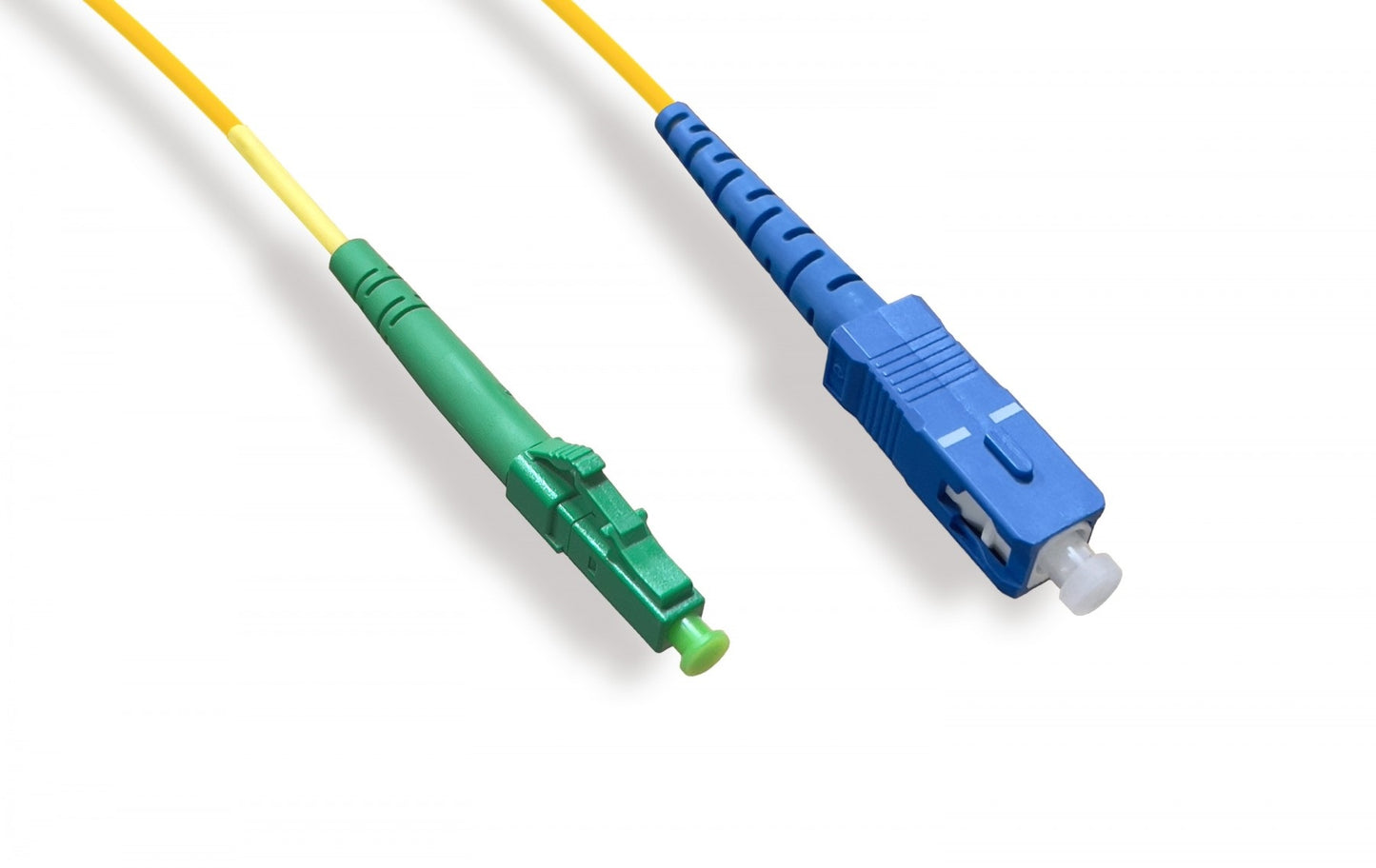
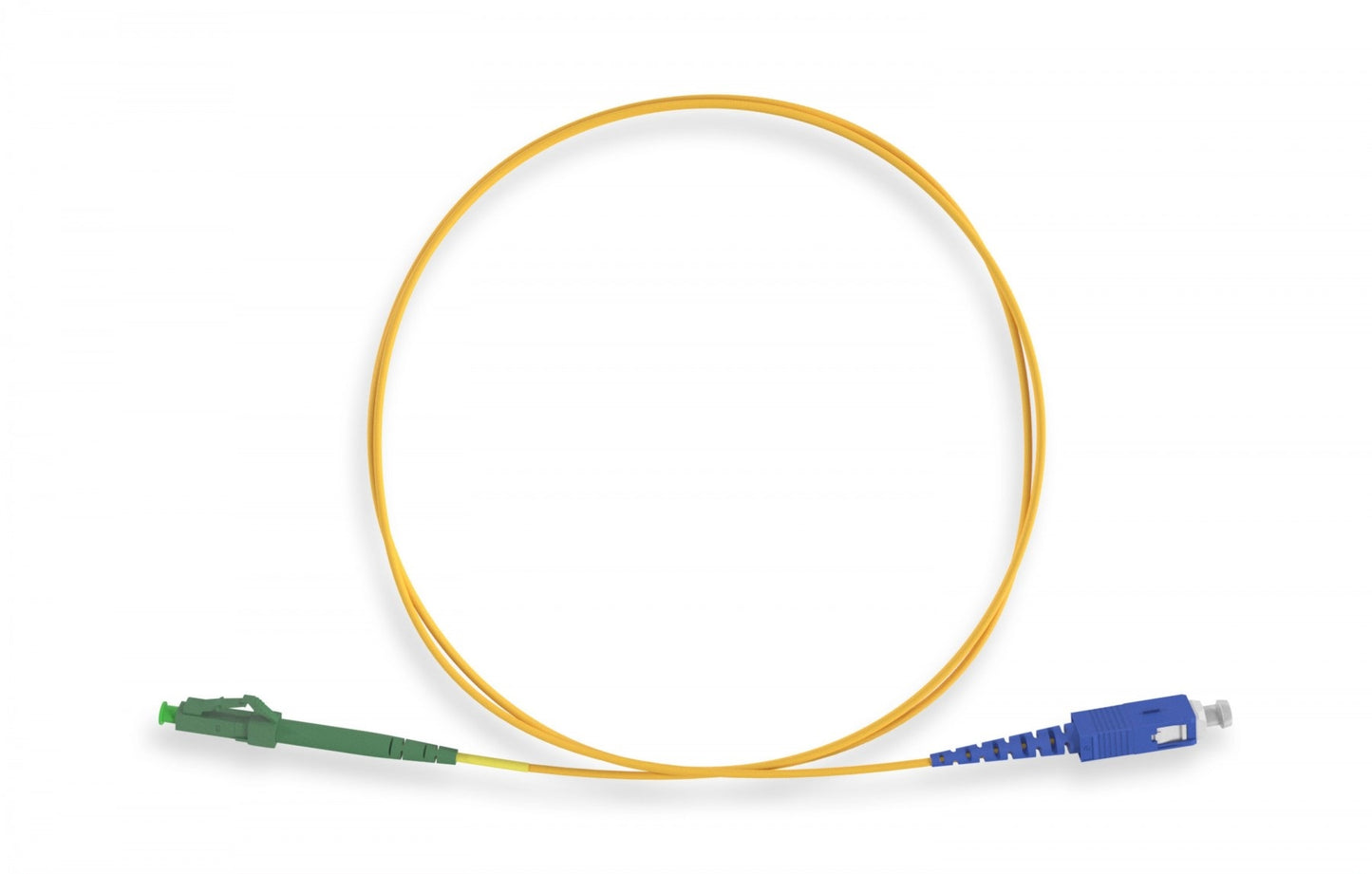
This is a single fiber singlemode patch cord with an LC/APC connector at one end and an SC/UPC connector at the other, so both the format and the polish change along its length. It is the mirror image of the usual transition cord: use it when the APC side of the link is the LC equipment or LC panel, and the UPC side is an SC port. Each end fits only its own kind of socket, so orientation is fixed.
Specifications
- Fiber type: OS2 singlemode, 9/125
- Fiber mode: Simplex, 1 strand
- Connectors: LC to SC
- Polish type: APC to UPC
- Wavelength: 1310nm and 1550nm
- Insertion loss: 0.3 dB or less
- Return loss: LC/APC end 65 dB or better, SC/UPC end 55 dB or better
- Fiber standard: ITU-T G657A1
- Fire rating: UL listed, OFNR riser rated
- Jacket material: PVC
- Jacket color: Yellow
- Jacket outside diameter: 2.0mm
- Core: Corning
- Lengths available: 1m, 2m, 3m, 5m, 10m
- Packaging: 1 piece in a zip bag
Good for
- Bringing an LC/APC terminated passive optical network port or splitter output across to an SC/UPC patch panel
- Landing an LC/APC drop onto an SC/UPC media converter or older SC equipment port
- Riser runs between floors where an OFNR rated jacket is required and the polish differs at the two ends of the link
Choosing the right fiber
- Singlemode (OS2): a 9 micron core for long distance, from a few hundred meters up to tens of kilometers. Yellow jacket by convention
- OM3 multimode: a 50 micron core rated for 10 Gigabit to 300 meters. Aqua jacket by convention
- OM4 multimode: a 50 micron core rated for 10 Gigabit to 550 meters, and 40 or 100 Gigabit over shorter distances. Aqua or violet jacket
- OM5 multimode: wideband multimode for short reach 40 and 100 Gigabit over fewer fibers. Lime green jacket
This product is OS2 singlemode with a 9/125 core and a yellow jacket, so it is for singlemode equipment and long distance links at 1310nm and 1550nm. It will not work with multimode transceivers.
FAQ
Can I mix singlemode and multimode? No. The transceivers on each end have to match the fiber type, and mixing them will not pass a link. Check what the SFP or transceiver in your switch is rated for before ordering.
Why does this cable have one UPC end and one APC end? It is a transition cord, made for the point where a UPC based patch field meets an APC based passive optical network. The polish on each connector still has to match the socket it goes into, so plug the APC end only into an APC port and the UPC end only into a UPC port. Getting them the wrong way round gives a poor connection and can damage the end face.
Simplex or duplex? Simplex is a single fiber, for bidirectional transceivers that send and receive over one strand, and for passive optical network drops. If your transceivers have separate transmit and receive ports, you need a duplex cable instead.
How should I handle the connectors? Leave the dust caps on until the moment you plug in, and never touch the end face. A fingerprint on the ferrule is one of the most common causes of a link that will not come up. Clean with a proper fiber cleaner, not with a cloth.
How is this different from the LC/UPC to SC/APC cord? The polish is on the opposite ends. Here the small LC connector is the APC end, green bodied by convention, and the larger SC connector is the UPC end, blue bodied by convention. If your LC side is UPC and your SC side is APC, order that version instead, not this one.
Why are the two return loss figures different? The angled APC end face reflects stray light out of the core, which is why the LC/APC end is specified at 65 dB or better while the flat polished SC/UPC end is specified at 55 dB or better. The link as a whole is limited by the weaker of the two.
Specifications
| Connectors | LC/APC to SC/UPC |
| Jacket rating | OFNR (riser) |
| Color | Yellow |
| Certifications | UL Listed |
Share