Collection: Cat6 Networking Cables
Cat6 is the sensible default for most wired networks. It runs gigabit comfortably across the full 100 metre channel, supports 10 Gigabit over shorter distances up to roughly 55 metres, and is specified to 550MHz. For office desks, home networks, IP cameras and access points it does everything asked of it without the bulk or cost of Cat6A.
Colour coding is worth doing properly
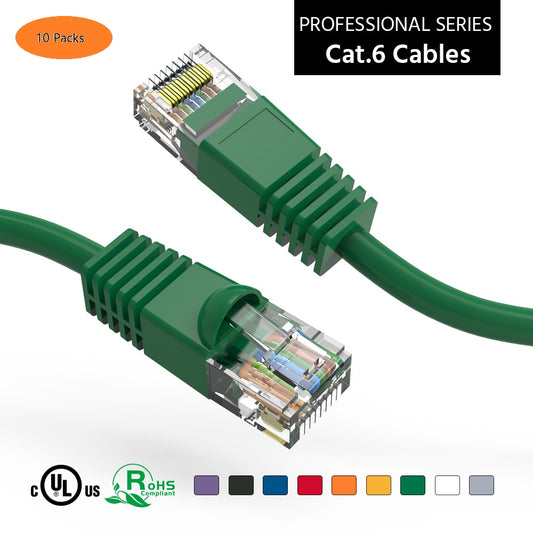
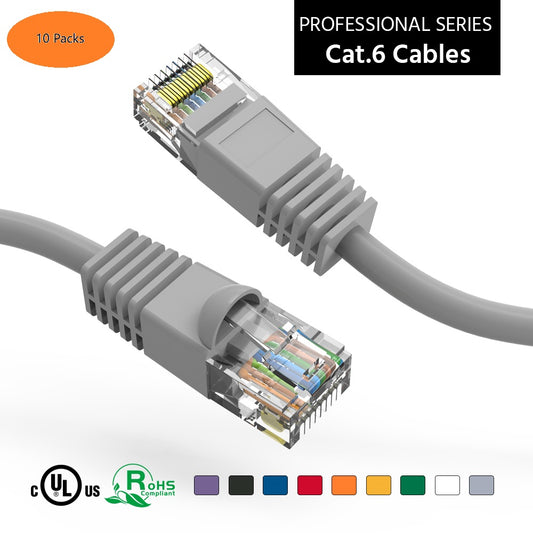
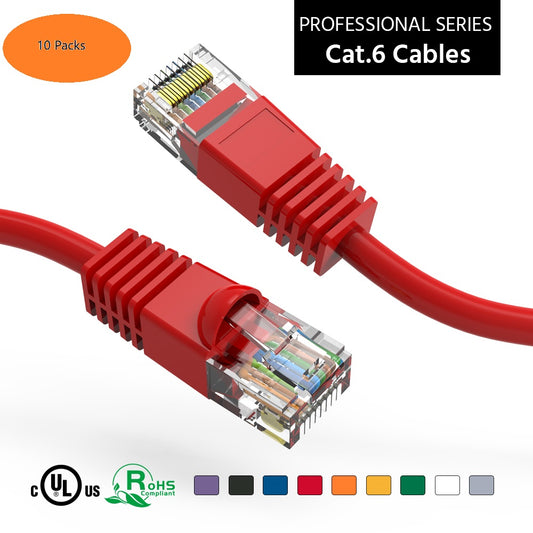
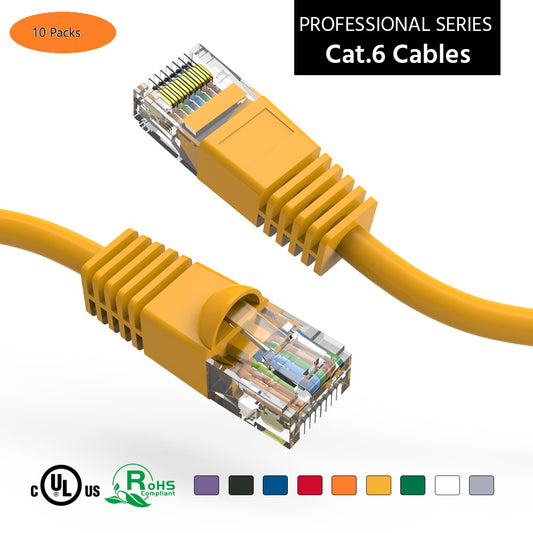
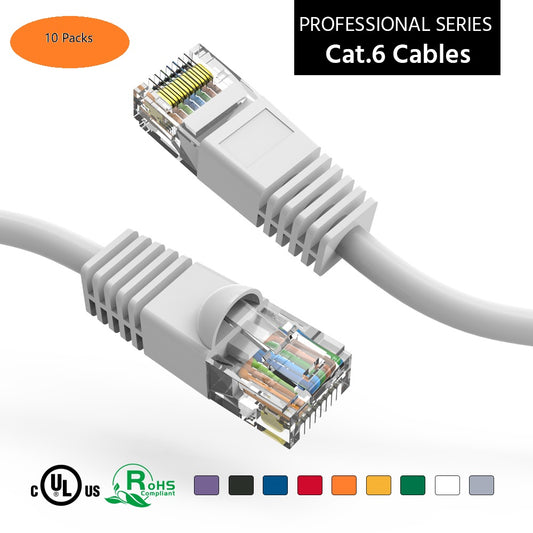
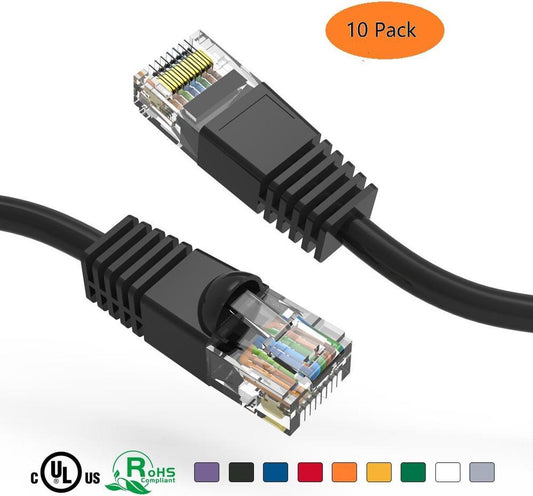
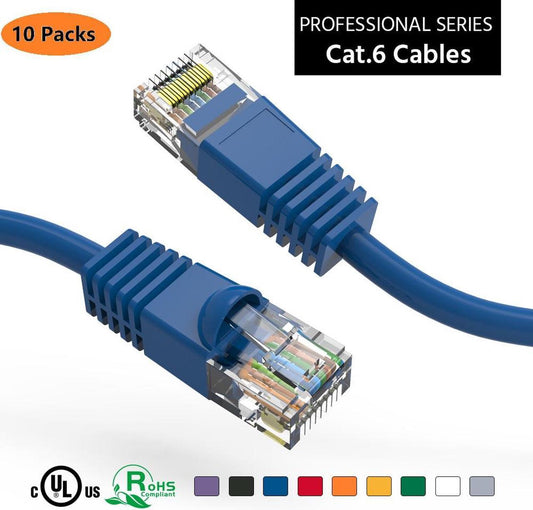
Stocked in ten colours because in a patch field colour is the fastest documentation you have. A consistent scheme, one colour for uplinks, another for voice, another for cameras, saves more time during a fault than any label ever will. Colour has no effect on electrical performance.
Snagless boots
The moulded boot covering the RJ45 latch stops it catching and snapping as cables are pulled through a bundle. A broken latch means a connector that no longer seats reliably, which produces exactly the kind of intermittent fault that takes hours to trace. In any densely populated rack, snagless is not a nicety.
Available in slim profile for high density patching, in flat construction for running under carpet or along skirting, and in ten packs for panel work.
Further reading: Cat6 vs Cat6a: Which Do You Actually Need? · Bulk Ethernet Cable: Solid vs Stranded · How to Terminate Ethernet Cable · How to Run Ethernet Through Walls · Cat5e vs Cat6: Which Do You Actually Need? · Ethernet Cable Colors and How to Plan a Color Code